When I got serious about AI at Tunga in January, the first thing I changed was my own inbox. I let AI empty my inboxes, process everything that came in and filter out the noise. Within days I knew: this works, and it feels good.
That is a much smaller start than the one economists describe. Their dominant view is that a technology like AI only pays off once you rebuild your organisation around it. Last week I wrote that in a big European study, money spent on reorganising alongside AI had no measurable effect. That is what the study found, and I was too quick to call it news. It compared spending and results over the same years, so a payoff that takes longer could never show up. So I went back to the research.
What the research says about reorganising for AI
The best-known version of that view comes from Erik Brynjolfsson, Daniel Rock and Chad Syverson (2021): rebuilding processes, structures and skills around a technology like AI first costs productivity, and only later lifts it above where it started.
Two newer studies show what that looks like in practice:
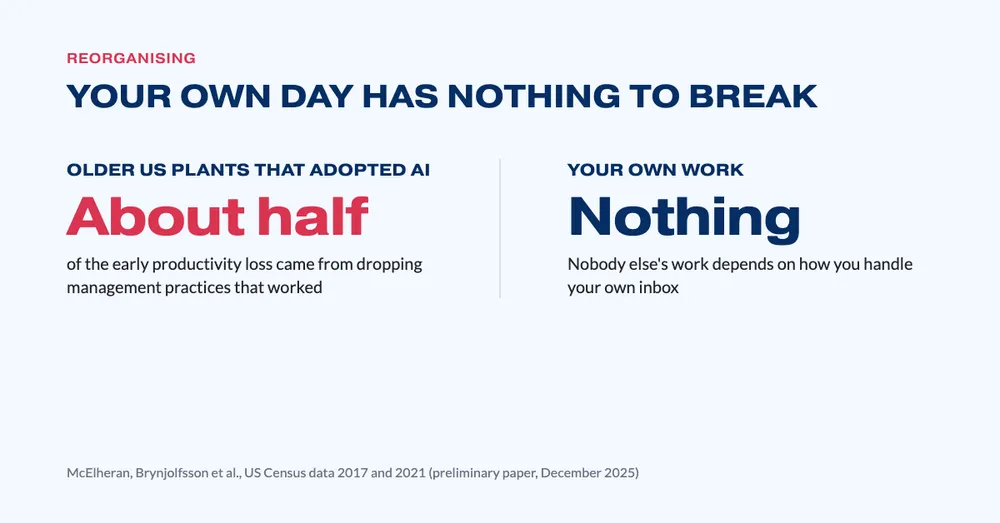
- It costs first, and it can break what worked. In US manufacturing, adopting AI first lowered productivity, and the plants that came through the dip grew faster afterwards. In older plants, roughly half of the loss came from dropping structured management practices that had been working (Kristina McElheran, Erik Brynjolfsson and colleagues, preliminary paper on US Census data for 2017 and 2021, December 2025).
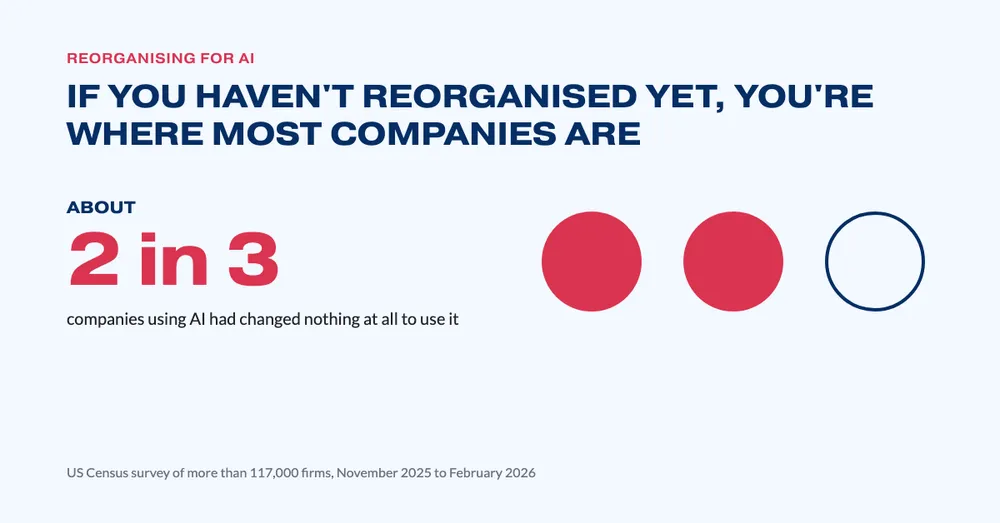
- Most companies haven't started. In a US Census survey of more than 117,000 firms (November 2025 to February 2026), about 2 in 3 companies using AI had changed nothing at all to use it. About 15% had developed new workflows, and about 15% had trained their staff.
So reorganising for AI does matter, but it costs before it pays, and the biggest risk early on is breaking what already worked.
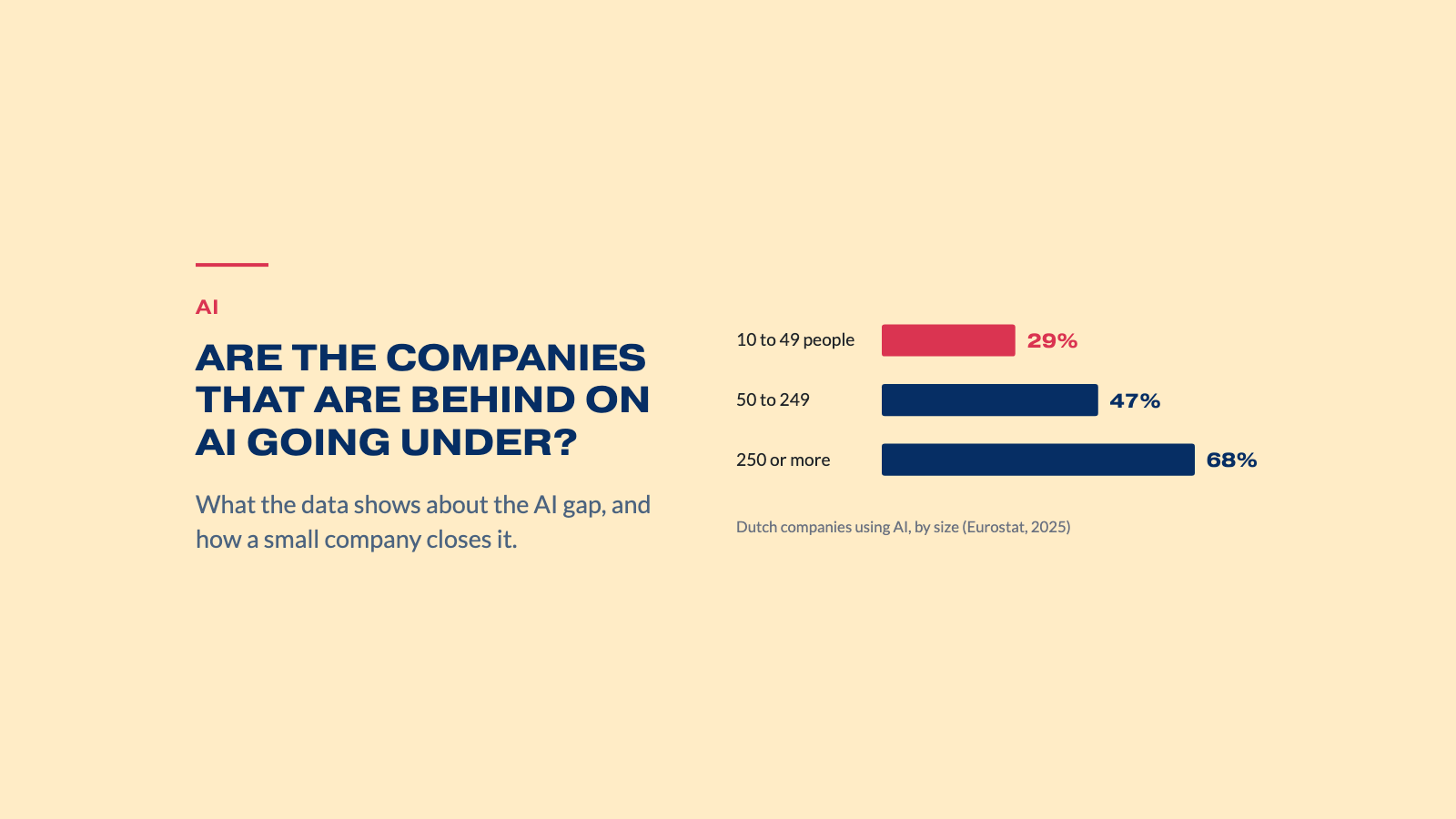
If you haven't reorganised anything for AI yet, you are where 2 in 3 companies that use it are. That still leaves the question of where to start.
What I got back from my inbox
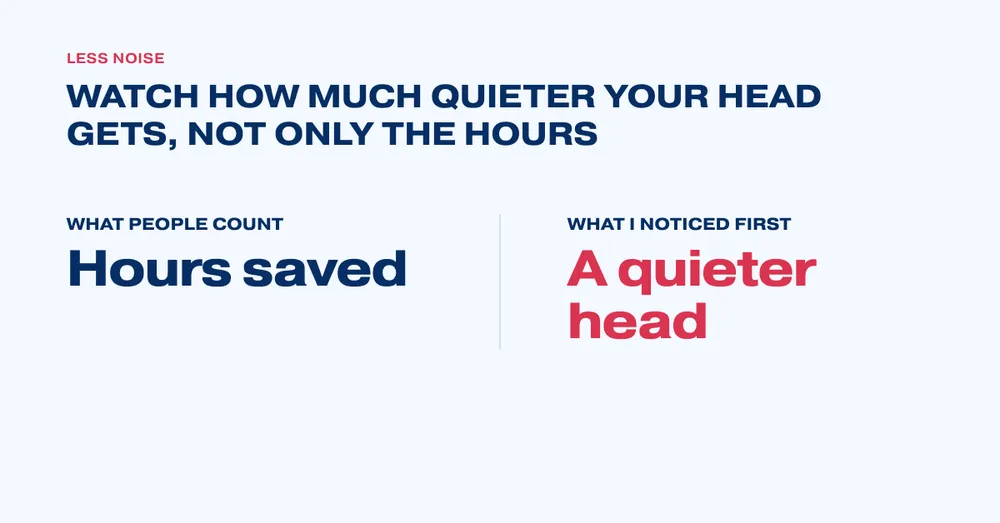
People mostly talk about the time AI saves. What I got back was headspace, because the noise was gone. A few weeks ago I wrote that headspace is the scarcest thing an entrepreneur has, and that what eats it is the things you have little grip on, big or small. An inbox full of half-sorted mail is exactly that kind of noise, and it was the first thing AI took off my mind.
The same thing turns up in products. One of our colleagues is building an AI product for entrepreneurs. The main design choice was to strip out everything that wasn't needed, so it is extremely simple to use. That choice was made on intuition, not as a stated principle. What people feel first is the noise that disappears, the same thing I felt in my inbox, so there is probably more to gain from designing for less noise on purpose.
The studies above measure productivity and what companies changed. What I noticed first wouldn't show up in either.
I think the first gain from AI is less noise, and that it matters more than the time you save.
Why every improvement started with me
Interestingly, every AI improvement at Tunga that I was involved in, I tried on my own work first. Looking back, there are three reasons that order works:
- You feel straight away whether it works. Nobody knows your day better than you do, so you notice at once whether something takes noise away or adds it.
- There is nothing to break. When I change how I handle my own inbox, nobody else's work depends on it. That is the opposite of the plants that lost productivity by dropping management practices that had been working.
- What works spreads from there. Once I had seen it work for myself, I could show colleagues something concrete instead of a plan.
When to reorganise
Not yet. Reorganise once you know from your own work what AI takes off your plate. Until then, start with your own day, and pay attention to how much quieter your head gets, not only to the hours.
I expect the founders who start there to reorganise better, because by then they have felt for themselves what AI takes away.