
This report gives a comprehensive overview of what IT staff augmentation is, how it is best organized, and what countries are attractive for IT augmentation services.
Until Covid struck, IT staff augmentation rapidly grew as a major alternative to software outsourcing and internal hiring of software developers. This report provides a comprehensive overview of the situation post-Covid: the basics of IT staff augmentation, market trends in the US and Europe, and what this means for the future.
What is staff augmentation?
Staff augmentation is a staffing strategy to flexibly and quickly expand your team. Through a provider, you can add talent to your team on demand. The provider employs the new team members, manages the recruitment process, and carries the legal and administrative burden. Staff augmentation is typically prevalent in the IT sector because it is often difficult to find qualified staff locally and software development lends itself well to remote work.
Advantages of IT staff augmentation
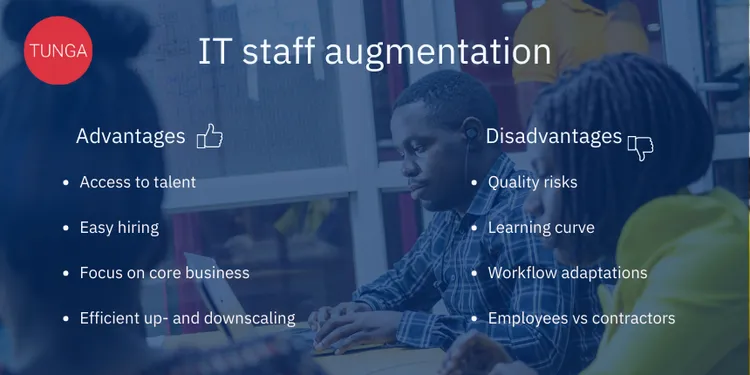
- Access to talent — Quickly find a fit for hard-to-fill positions
- Easy hiring — Leverage the provider's talent pool and recruitment capacity
- Focus on your core business — The provider handles hiring process and administrative burden
- Efficient up- and downscaling — Scale your team flexibly on demand
Disadvantages of IT staff augmentation
- Quality risks — Harder to manage quality of geographically and culturally distant team members
- Learning curve — Onboarding may require extensive training on code base or domain knowledge
- Workflow adaptations — Not every company is experienced with remote team members
- Employees vs. contractors — You are investing in talent that is not your permanent staff
Staff augmentation vs. software outsourcing
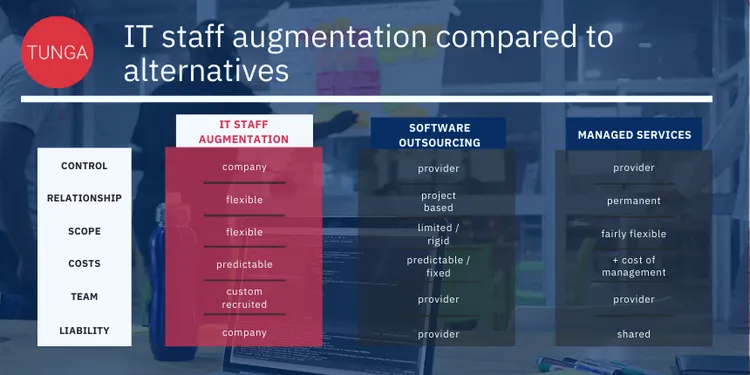
With staff augmentation, you are in charge of the work. With outsourcing, the provider is. Staff augmentation has become popular because software requirements change from week to week — a rigid vendor relationship committed to a pre-determined result does not work well.
Selecting the right partner
Key criteria: track record (how long in business, client references), pricing (transparent, fair, and realistic), English proficiency, developer pool size and transparency, and performance data including technical and soft skills test results.
Staff augmentation best practices
- Hardware — Ensure all team members have good laptops, phones, internet connection
- Meeting rhythm — Regularly scheduled standups and meetings
- Clear guidelines — Establish clear rules of engagement
- Socialize — Invest in online social gatherings and informal communication
- Proper tooling — Make sure everyone has access to the tools necessary
The United States market for IT staff augmentation
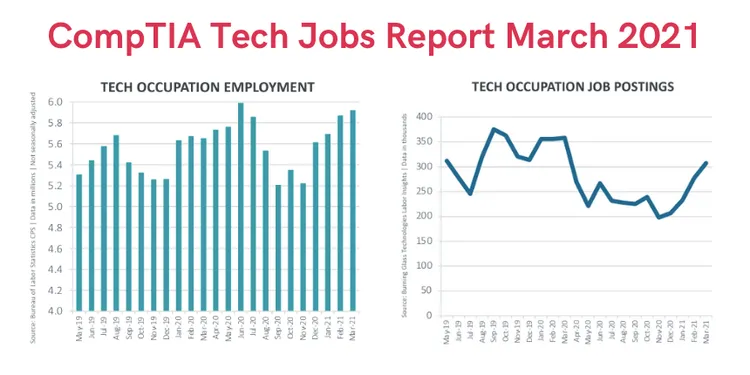
Employers in the US could only hire 6 for every ten open tech positions. Tech roles take 61 days to fill on average vs 42 days for non-tech roles. Tech employment by 2030 is expected to reach around 9 million positions — an increase of 1 million. The US currently produces about 65,000 students with computer science degrees each year.
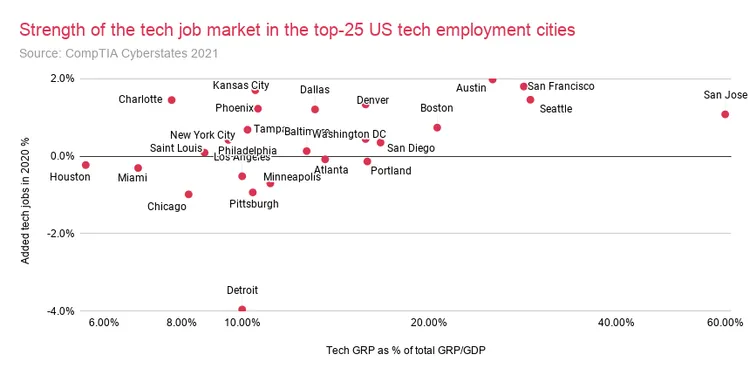
Best cities for tech jobs in 2021
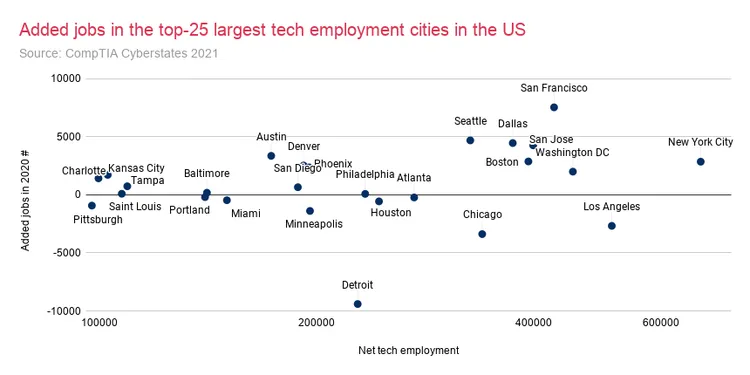
The top ten metropolitan areas employ over 4 million tech workers. New York, Los Angeles, and Washington form the top 3. San Francisco, Seattle, and Dallas show the highest demand growth. Demand for tech workers is growing fastest in San Francisco, Seattle, and Dallas.
The European market for IT staff augmentation
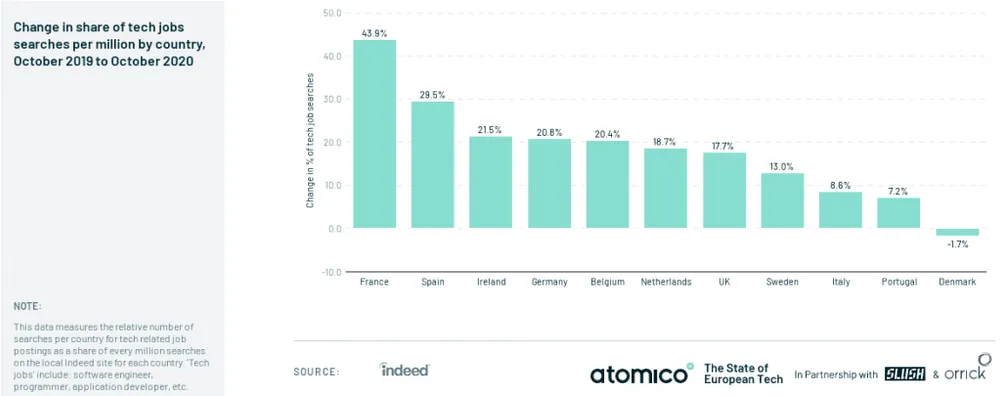
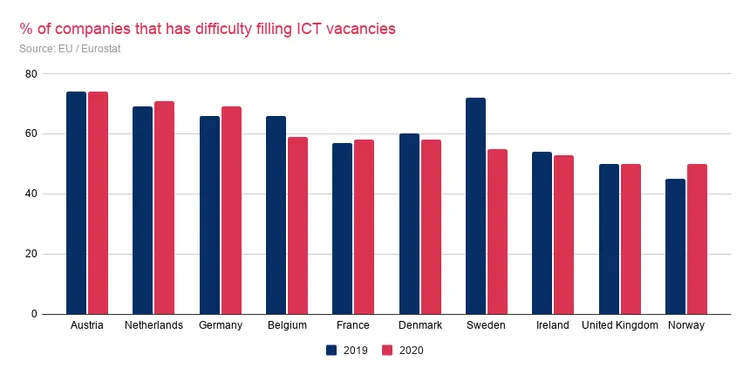
On average, 58% of companies in the EU trying to recruit ICT workers experience problems filling their vacancies. The European software developer population was estimated at around 6.1 million in 2019, growing at 7% year-on-year while demand grows more than 10%.
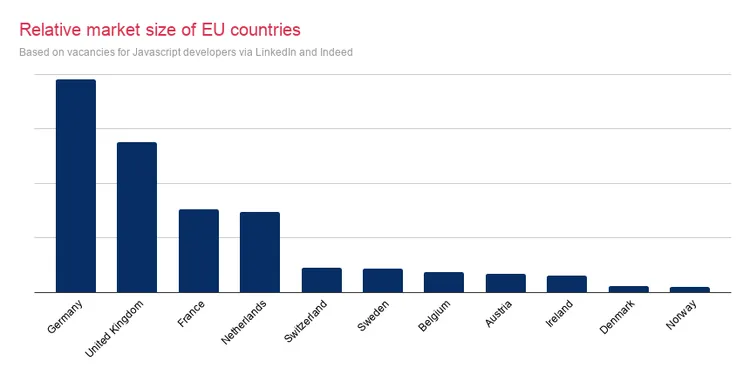
The most important EU markets are Germany, the United Kingdom, and France. The percentage of companies reporting difficulty filling ICT vacancies is highest in Austria, Netherlands, and Germany.
Conclusion: IT staff augmentation post-Covid
The demand for tech talent will remain strong. Covid caused at best a temporary pause in the market. The tech talent shortage will continue to drive demand for IT staff augmentation services in both the US and western Europe.
In particular, smaller-sized companies have trouble finding solutions for talent scarcity. For those companies, staff augmentation can be a way to access good developers and build a team with them for the longer term. The acceptance for working with remote teams has grown tremendously, and with it the knowledge base, experience, tooling, and processes to make it a success.