The negotiation that keeps breaking, and what actually fixes it Every few weeks, we watch the same pattern repeat. A European company quotes a budget based on "Africa rates." An experienced developer in Lagos or Nairobi quotes something close to European levels. Both numbers make
The negotiation that keeps breaking, and what actually fixes it
Every few weeks, we watch the same pattern repeat. A European company quotes a budget based on 'Africa rates.' An experienced developer in Lagos or Nairobi quotes something close to European levels. Both numbers make sense. Both feel fair to the person giving them. And yet the conversation stalls.
The awkwardness isn't about bad faith. It's about different maps of the same territory. One side expects a significant cost advantage. The other expects compensation that reflects capability, not geography. Both are looking at market data. Both are being reasonable.
What you will find here
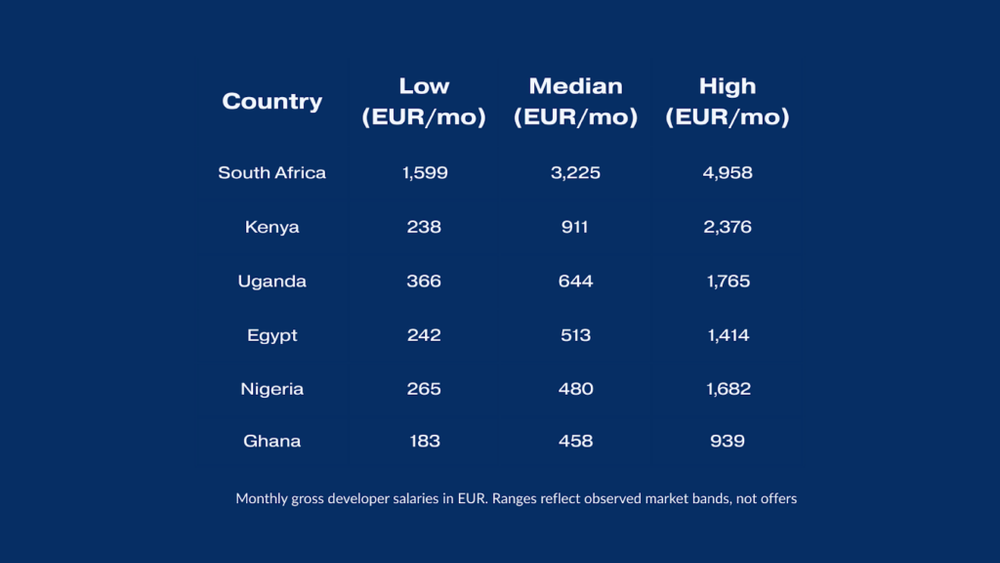
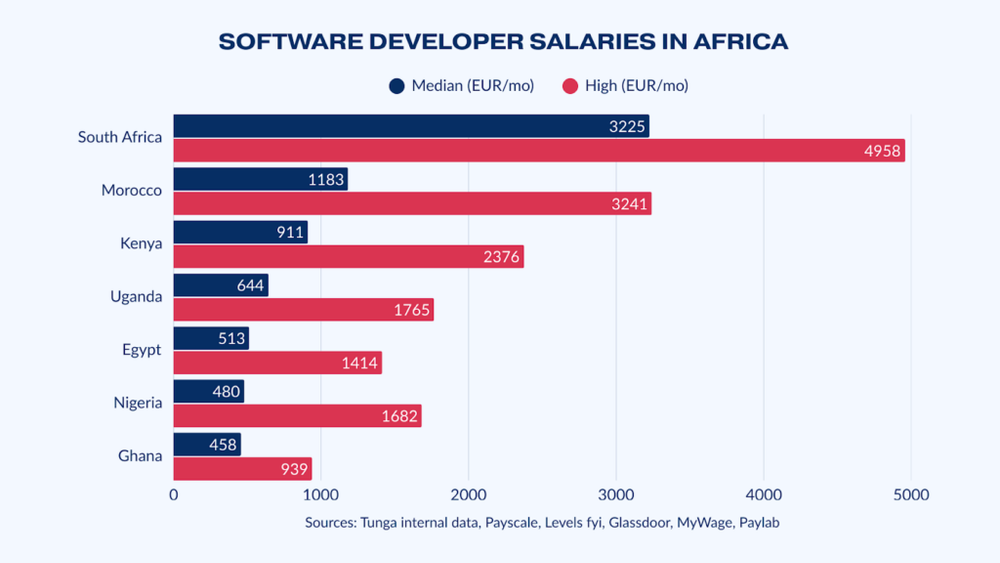
Three things we keep seeing in our daily work placing African developers with European and North American clients: first, country-by-country salary bands (low, median, high) normalized to EUR per month. Second, why purchasing power and lived costs matter more than most salary discussions acknowledge. Third, what actually creates the premium in distributed work.
The pattern: both sides are using different anchors
From developers: "A European developer doing my job makes €70,000. If I'm delivering the same quality work, why should I accept less?" From companies: "Hiring from Africa means more complexity: time zones, cultural navigation, higher risk of mismatch. The cost advantage should offset that risk." Both positions make sense in isolation.
What usually happens next
Path one — proactive navigation: our teams step in early, painting the picture of what the other side is seeing. To the developer: 'Based on your skills and experience, this is what the market will actually bear.' To the company: 'Here is what this looks like from the developer's perspective. This rate reflects both capability and market reality.'
Path two — the negotiation 'succeeds' but the relationship doesn't: sometimes one side feels they got a bad deal but accepts anyway. Then, a few months in, something breaks. The developer starts looking elsewhere. The client starts managing to the penny. What looked like a successful negotiation becomes an early termination. That's the real cost.
Cost of living reshapes the story more than either side expects
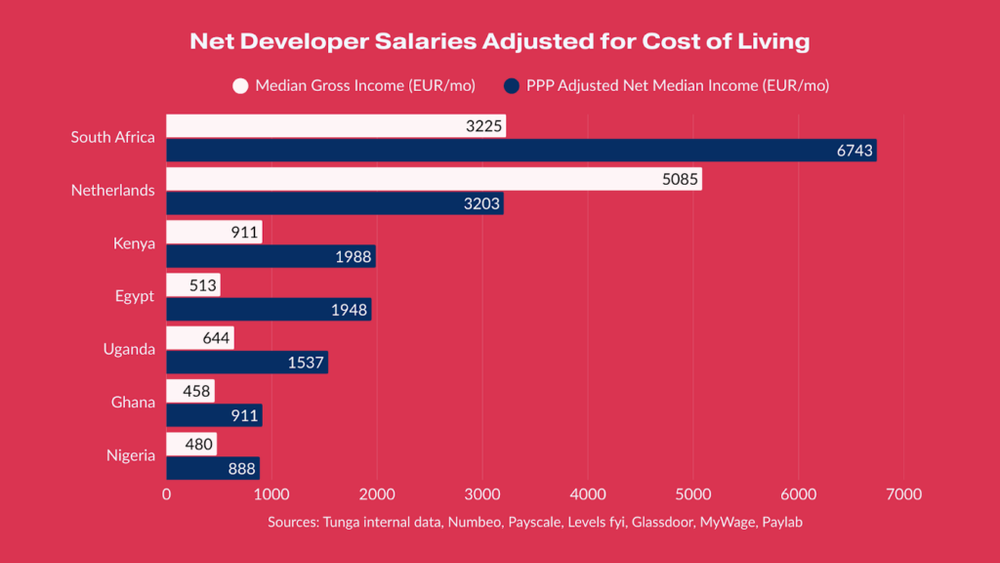
When you compare salaries in purchasing power terms rather than nominal terms, the distance between 'Africa' and 'Europe' shrinks materially in lived terms, even when it remains large in nominal terms. For developers, European salaries look high nominally but much of that difference gets absorbed by taxes, rent, and local costs. For companies, you're not getting 'cheap' talent when you hire senior developers — you're getting access to capability that's structurally underpriced, and that mispricing is correcting.
What actually determines the premium
The difference between a developer who stays at local pricing and one who commands near-European rates is almost always this: can you reduce risk and friction for the people around you, especially when they can't see you?
- You ship and support production systems, not just features — when something breaks, you fix it
- You take initiative within boundaries and ask clarifying questions before you're stuck
- You communicate proactively and surface problems early before misunderstandings accumulate
- You structure and document your code so someone else can pick it up
Put differently: you make distributed work easier, not harder. This is what clients pay for at the top end.
The moment things shift
Many of our clients have never hired from Africa. 'Remote African developer' is an abstraction, and abstractions are uncomfortable. Then the first interview happens. The camera works. The connection is stable. The developer speaks fluent English, asks smart questions, and demonstrates expertise. What the client feared becomes a specific person they can evaluate like anyone else. That shift — from abstract risk to concrete evaluation — is where the salary conversation often becomes easier.
Why negotiating for the quick win breaks the long game
Success is not a quick hit in a negotiation. Success is negotiating for a strong foundation for long-term collaboration. When a client pushes too hard on price, they might 'win' the negotiation but lose the relationship. When a developer holds out for a number genuinely out of market, they lose the opportunity. The goal is to find a number that both sides can live with and build on.
What we actually do differently
We show both sides the other side's perspective — we don't just relay numbers, we translate worldviews. We come with context, not just numbers, showing the market data and explaining how we got there. We're willing to walk away to maintain trust: if a developer's rate is genuinely out of market or a client's budget is unrealistic, we tell them. We'd rather lose a deal than lose credibility.