
This research article describes in detail which countries are most suitable for sourcing African software developers and why.
Are you considering sourcing African software developers? Are you looking for reliable data on and insights into the African software development sector? This research article provides background on the level of African developer salaries, business climate, English proficiency, and the number of developers per software language per country.
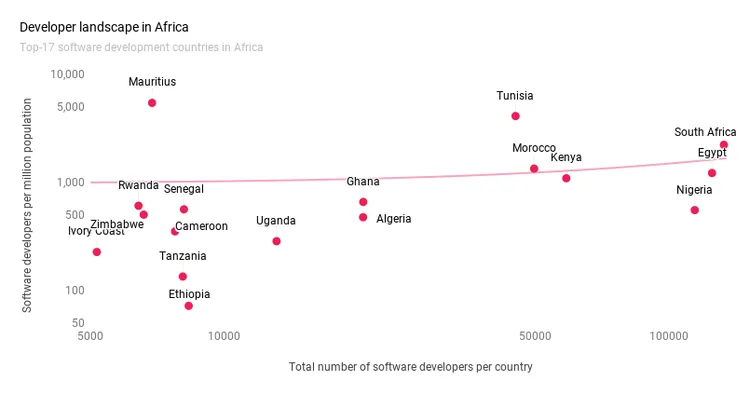
Total number of software developers per African country
There are an estimated 690,000 professional software programmers in Africa. Over half are from South Africa, Egypt, and Nigeria. The top-17 countries represent more than 90% of the entire African IT talent pool.
- South Africa – 133,195
- Egypt – 125,270
- Nigeria – 114,536
- Kenya – 58,866
- Morocco – 49,818
- Tunisia – 45,247
- Ghana – 20,551
- Algeria – 20,530
- Uganda – 13,113
- Ethiopia – 8,316
- Senegal – 8,113
- Tanzania – 8,065
- Cameroon – 7,748
- Mauritius – 6,879
- Zimbabwe – 6,588
- Rwanda – 6,412
- Ivory Coast – 5,165
When ranked by developers per million population, Mauritius (5,454) and Tunisia (4,120) lead, followed by South Africa (2,234), Morocco (1,345), Egypt (1,224), and Kenya (1,095).
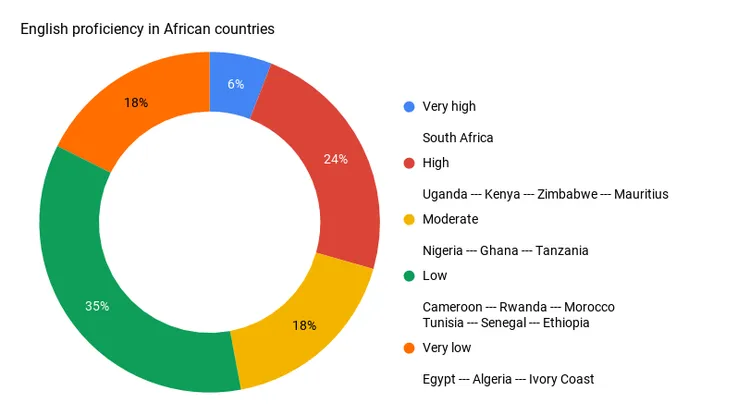
English proficiency levels across the African continent
English proficiency is a key requirement for many companies looking to source African developers. Arab and predominantly Francophone countries generally have relatively low English proficiency scores. Software professionals tend to be much more proficient than the average population.
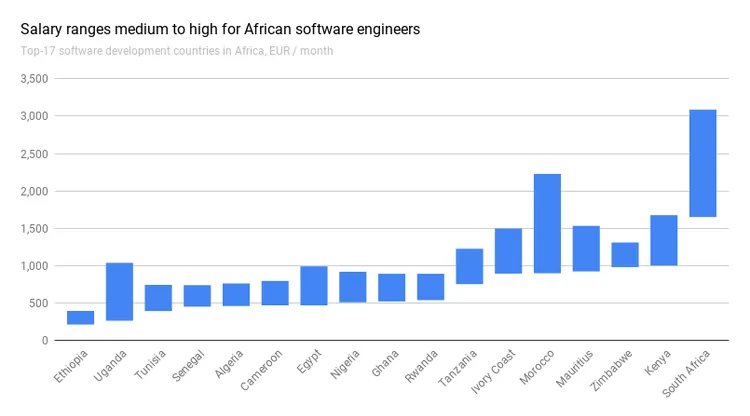
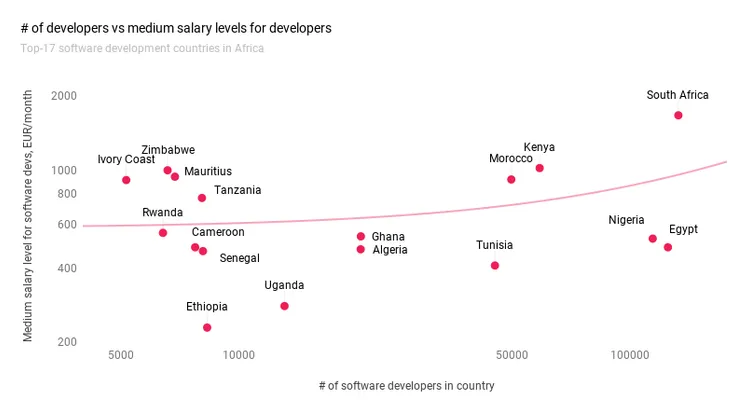
Salary levels for software developers in Africa
The range of developer salaries is extensive. Ethiopia's medium monthly salary level is only EUR 229. In South Africa, it is almost eight times higher and the upper band is 15 times higher.
The African tech ecosystem
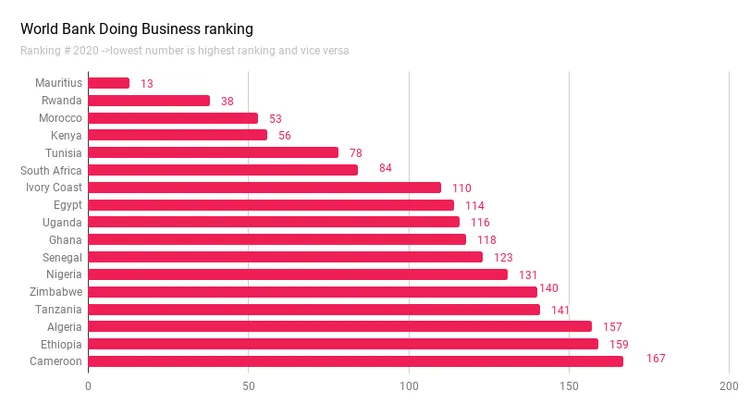
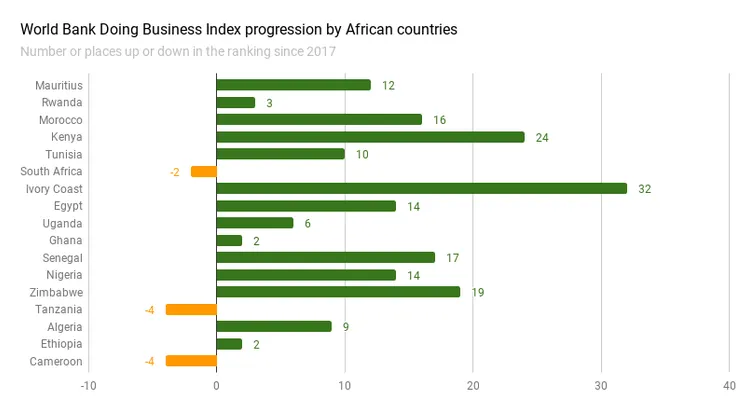
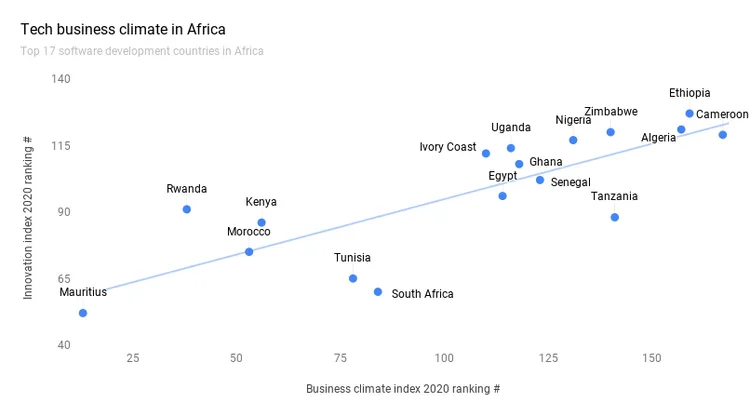
Mauritius and Rwanda are the only African countries in the top 50 of the World Bank Doing Business ranking. Kenya and Morocco are closing in on the top 50. Nigeria, Egypt, Senegal, Zimbabwe, and Ivory Coast have made impressive leaps on the list.
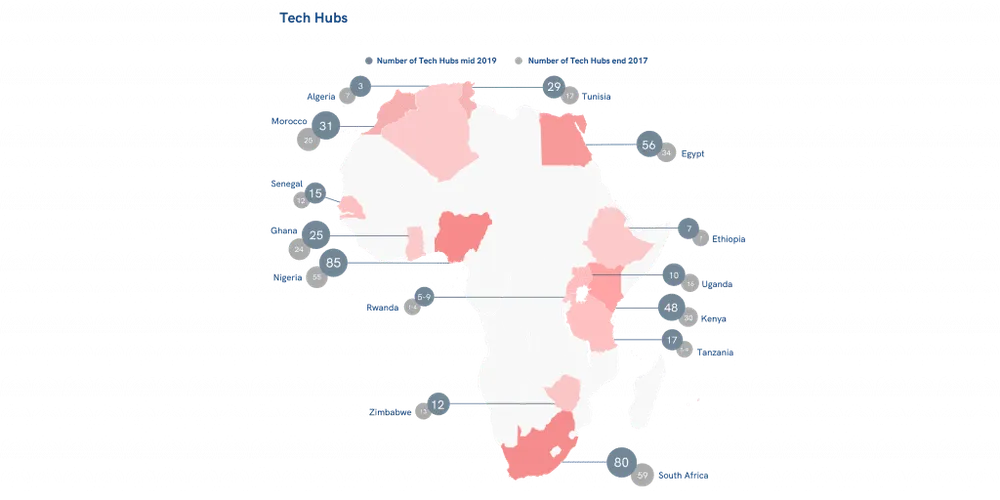
Since 2016 GSMA has been mapping the number of tech hubs in Africa — the backbone of Africa's tech ecosystem. For the first time, Nigeria has surpassed South Africa in number of hubs.
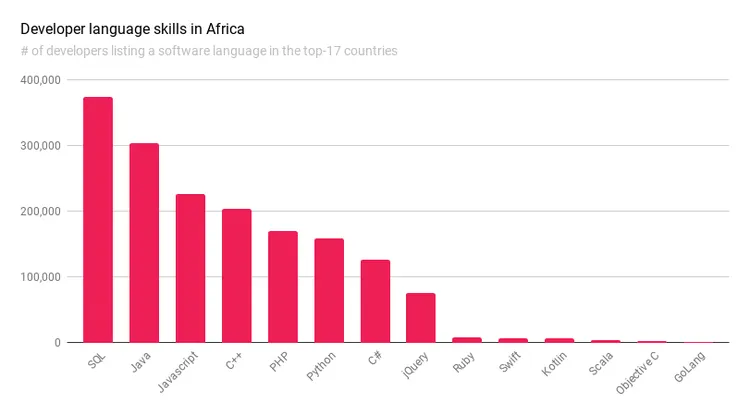
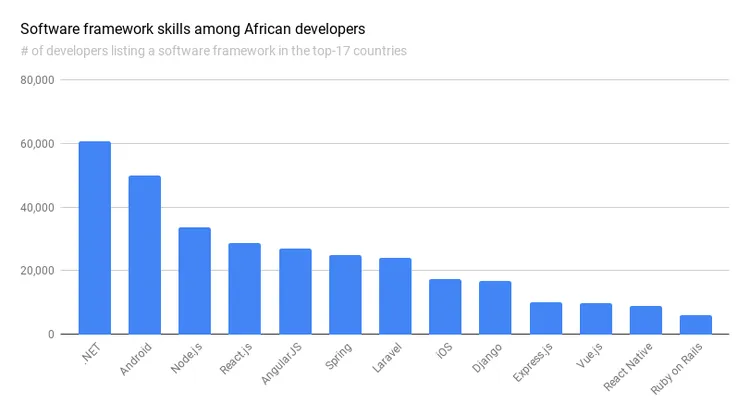
African software developer skills: languages and frameworks
The most popular software languages are in substantial supply in Africa. However, there is a sharp drop-off concerning more minor languages. .NET tops the frameworks list, followed by Android and the mostly used Javascript frameworks.
Conclusion: from frontrunners to late-bloomers
The Frontrunners
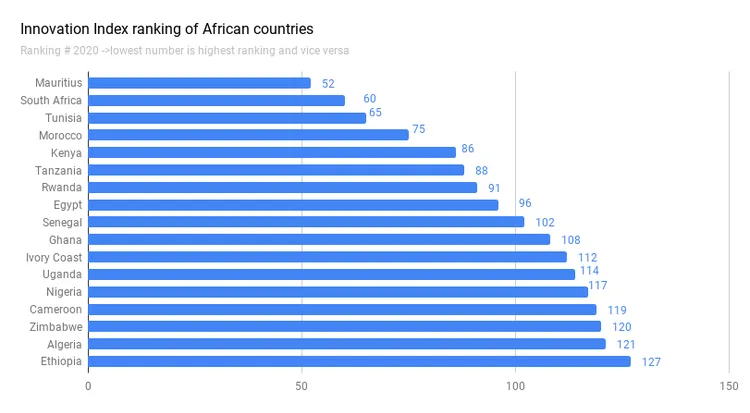
Mauritius, South Africa, Morocco, Tunisia, and Kenya. High developer numbers per million population, good English proficiency, relatively high salary levels, and attractive tech business climate. The most risk-averse choice for sourcing.
The Awakening Giants
Nigeria and Egypt. Enormous populations and vast talent pools. In Nigeria, English proficiency is a plus. Salary levels are still very moderate. The tech business climate is improving rapidly.
The Promising Outsiders
Ghana, Senegal, Uganda, Rwanda, and Cameroon. Each with distinct advantages: Ghana and Uganda have substantial developer populations and good English proficiency; Senegal and Cameroon have relatively well-developed ICT sectors; Rwanda has a perfect business climate.
The Late-Bloomers
Ethiopia, Tanzania, Zimbabwe, Ivory Coast, and Algeria. These countries certainly have potential but have not been able to unlock it at scale yet. Africa is a relatively undiscovered and fast-growing breeding ground for software developers — all popular skills and frameworks are available in the African tech talent pool.